Thursday, October 21, 2010

Taking Care of our Kids

Bothered? Yes, I am. I'm trying not to use certain words to describe some vile people in the world today. I'm also trying to figure out, as I type, how to put this so others will understand the anguish I feel.

Kids, children, rug rats, pediatrics, infants, neonates, preemies, whatever you want to call them, they're the part of our population that happens to be one of the most defenseless bunch. They rely on us, the adults, to take care of them, to defend them, to protect them and keep them safe from harm. WE are their security blanket.
Seemingly every day I see in the local news how some poor child has been injured as a result of domestic abuse. They've been smacked, burned, smacked, or whatever. I opened the website of one of the local TV stations today and saw where one child had actually been "stomped" on. Another had been burned. Yet a third had broken arms and brain damage. Seeing these types of stories hurts. I guess one would think that certain areas of the world may be immune to these types of problems yet they aren't. They're everywhere. Abuse is everywhere.

Every time I go through a PALS or NALS class I always think about using some of these skills and knowledge on one of my kids. Would I? Could I? How could I block out the fact that I'm working on my own child? How will I react? Will I freeze up and keep mumbling over and over that this is my child? God forbid it ever happen but to others, it has. It does happen. People every day see their children or ones that they know hurt, injured, or even killed at the hands of others or some other medical problem.

My first true pediatric emergency happened on Christmas morning shortly before I was to finish Paramedic class. I was low man so I got stuck with working the holiday. Obviously not where I wanted to be as I've always been a family person and spending those times with them meant a lot to me.

I remember it was a gorgeous Christmas morning. I walked in the ER with my partner to see the entire ER was decorated with lights, tinsel hanging from the desk and counter areas, not a single patient was in any of the rooms, and the back counter facing the patient rooms was filled with tray after tray of holiday goodies brought in by the ER staff who, like me, got stuck working that day. A couple of the nurses had on Christmas - themed scrubs and tops on. Someone had a radio on in one of the back rooms playing Christmas carols and we had picked up and decorated a small 3' tree in the corner of the ER by the ambulance entrance. Hell, if we had to be there on this gorgeous holiday morning we were going to do our best to make it bearable. We were having fun all sitting down behind the counter telling stories, catching up, talking about family and what we were going to do when we left there that afternoon, and how quickly we could come back in the next day and show off our new presents.

0904 A local volunteer ambulance service about 10 miles south gets dispatched on an unresponsive infant. As was our area's SOP we were dispatched shortly after as the nearest ALS unit. My partner and I hopped in our truck to head south. Pediatric runs are never fun, regardless of the call. They induce a lot more stress since thankfully we don't deal with a lot of them. But the possibility is always there, every day, every night, all the time.

0906 We mark enroute just ahead of the BLS unit from the southern department. We're told by dispatch the infant is not breathing and CPR is in progress. Both our hearts sank. We looked at each other with a quick glance that said, "Shit. This is Christmas. This isn't supposed to happen on Christmas Day!" I got out of the passenger seat and went to the back of the truck to get things ready for my partner.

0913 We met up with the BLS truck heading north towards the hospital. We both pile out of the truck to see what was going on. One of their crew members met us halfway with a lifeless baby girl, not yet 6 months old, in his arms, coming to meet us. We had a big modular bus so we simply went in our truck; more room, easier to move around. We sat on scene for a couple minutes as two of the volunteers got in, continued CPR and were bagging this little girl. I intubated the little girl without problem and secured the tube as best I could. My partner started an IV and got on the radio to alert the ER what we were bringing in as well as telling them to get our doc ready. We got so busy doing that that we actually asked one of the volunteers to drive our truck back to the hospital with us as passengers. This was one of those "extenuating circumstances."

We arrived in the ER bay with CPR being done. No breathing, no pulse, nothing. We'd done all we could do and now it was time for the ER staff to put down their cookies that we were all enjoying less than 30 minutes earlier and work their asses off. We remained out of service as we stayed in the trauma room to help out; whatever needed to be done, we did it. We started another IV. I did compressions for another 30 minutes while an RRT ventilated. The doc barked out some orders to one of the barrage of nurses in the room. Somewhere in the middle of it we were told to stop. "Let's do a pulse check." The monitor showed something that resembled a faint sinus tach. We'd been working on her for about an hour.

Holy shit there was a pulse! A faint brachial pulse was felt. Someone else felt the other side to make sure I wasn't nuts. They too felt it. Instantly a huge smile crossed my down turned face. I heard a couple whoops and hollers in the background and in the hallway outside the trauma room. We all knew this little girl had a long way to go but we'd done our part in helping her. This was our Christmas miracle.
Everyone went around patting each other on the back, hugs were exchanged, and "good job, well done" seemed to be the phrases said to everyone by everyone else. A true team effort by all of us; all of us, who none of us wanted to be there that morning, THIS morning, Christmas morning, at work. We wanted to be at home enjoying the holiday with our families.

About an hour later we flew that little girl down to a children's hospital for definitive care. As the helicopter took off from the pad outside the ambulance bay I stood there watching, wondering, hoping that things would get better. I played the scene over and over wondering what I could have done differently. What could I have done better? Was there anything we forgot? Anything we did wrong? All I cared about was that was did our part. We helped out. We gave this little girl a fighting chance to live on this morning of December 25th. As they rose up in the air I cried. I was spent. Here I was 20 years old and emotionally worn out. I'd gone from one extreme to the other that morning; it wasn't even noon yet and all this had happened.

That was the first and last patient I've ever cried over.

She wasn't the victim of abuse or violence like the ones in today's news. But I think of her every time I see stories like these in the papers. How can people treat kids, let alone their own, with such hatred and malice? Thy can't talk back. They can't defend themselves. They can't protect themselves. They NEED us to do it for them. We are their shields. I often ask myself if there was this much abuse when I was younger. Have families changed that much over the years? Have attitudes changed? Have personalities evolved so much to bring out this much violence towards children? It sickens me. It hurts. It makes me want to find these people and beat the shit out of them. How can they do what they do? How can they hurt a child?
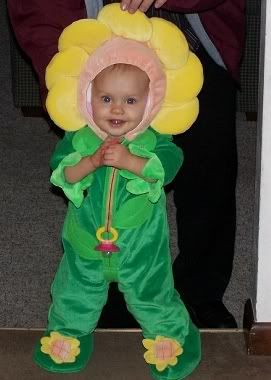
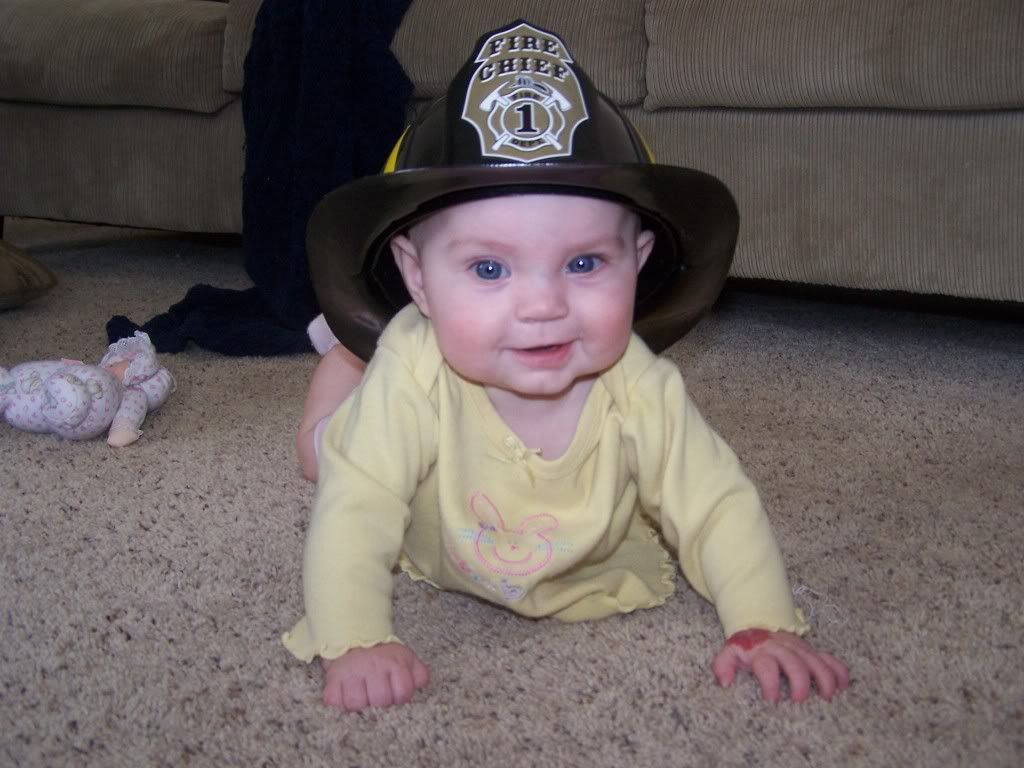
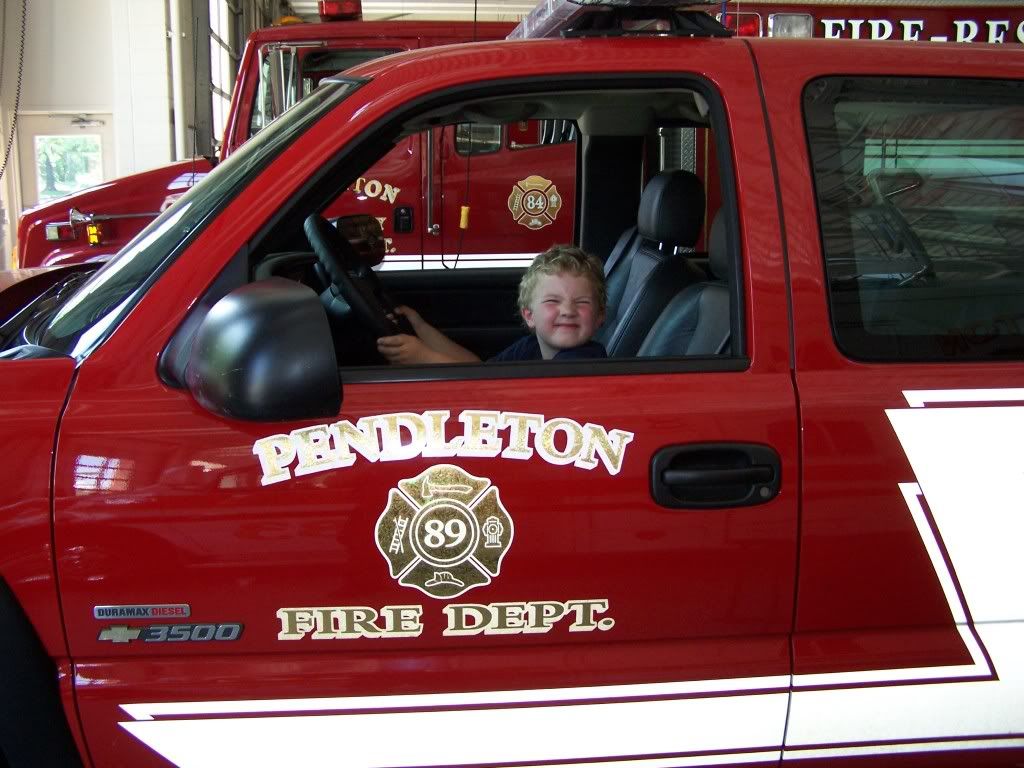
Children are our future. They are what we raise them to be. They emulate us as adults, mentors, and parents. We are to be here for them. We educate them, protect them, and love them. The three pictures here are of my three kids. I adore each of them and will lay my life on the line for each of them. They are what I live for each and every day. The hugs, the kisses, the "daddy, I missed you today" words, and the "I love you" that I get several times each day from all three of them.

Love your children or those close to you. Protect them. Be there for them. Educate and mentor them. The greatest form of love I've ever felt comes from my kids. They mean it when they hug me. They love to be around me and me them. There's no greater form of happiness than a smile, kiss, and hug from a child that all say, "I love you."

Friday, October 8, 2010

Good Communication Is Essential!

Huh? Wuzzat? You say something?

One thing I was always taught was to listen to what was told and confirm what you thought you heard. Yeah, I've had those moments where I "thought" I heard something and my brain played tricks on me. I'll take it as part of growing old (er).

Maybe it's part of selective hearing. Maybe it's selective listening. Maybe (God forbid) it's a combination of both. Again, I'll always use the standby of just getting old. I know my hearing isn't what it used to be and I'll blame that on my partial hearing loss. I can see myself in 10 or 15 years wearing a hearing aid if things don't get better. I'll be using a doppler in the back of the bus just to hear a patient cough.

Precepted a new Paramedic student the other day and had to laugh when we were done with our run. Older lady who wasn't feeling too hot and wanted to go to the ER. She'd just gotten home after a hx of seizures and had been home less than 1 hr prior to our arrival. We got her all loaded up and put in the bus, O2 and monitor done, lock placed and secured, cbg done, and then all was fine with the world.

Then, out of nowhere, <<bllllleeeeeeccchhhhhh>> here came the pukes. Just one easy round of it with a couple dry heaves. No projectile messes but enough to cause a little cleanup to happen. Looked over at the monitor and see her rate drop to the mid to high 50s. Her initial BP was 100 / 60. She had vagaled out on the toilet which was the reason for the call (unresponsive but breathing). She now was talking and alert but all this happened at once. I asked for another BP. It was still a little low, lower than before but not under the magic threshold of 90. Still bradycardic and I noticed some couplets beginning. She said she felt all right but still was sick at her stomach.

I'm sitting at the patient's head in the single seat while the student's on the bench seat on the patient's left side. I hear him say something about giving her some drugs. I hear "dopamine" and his question of if we should give her some or not. "Dopamine? I haven't given that in over 10 years and only used it twice in 20 years!" Huh? He wanted to give her that? For having a sick stomach, a little pukey, a little bradycardic with some couplets and a slightly low BP? Really???

So I begin quizzing him on the drug; it's uses, contraindications, side effects, dosages. All of these things he's not too sure of since they're just beginning pharm in his class. After a couple minutes I ask him why he's wanting to give such a powerful drug for these reasons and him not know everything about it's actions and reactions. It just didn't make sense to me.

His response was, "Dopamine? Huh? I was talking about Zofran." Oh dear God,... He was confused as to why I was battering him on the why fors and why nots of giving dopamine and here he was asking about something else. I was giving all the reasons why not, what sort of reactions we could look for IF it was given to any patient. I had been thinking to myself and wondering why in the hell he wanted to give dopamine, yet I didn't bother to confirm with him exactly what it was he was wanting.

Ever called in a report and a doc says one thing and you hear another? Ever asked for an order, you get one response and hear another? Ever played the telephone game as a kid to see how one sentence starts and then ends totally different?

Kind of one of those "look at the drug three times before giving it" to make sure the right one is in your hand. I know that in my 23 years of EMS I've never been in the back of ANY bus that's quiet. I've taken patients in cars, trucks, buses, ambulances, boats, and helicopters and there is no such thing as a quiet ride to the hospital anywhere in the world. If there is, I haven't found it yet. If nothing else, this one reminded me (and us) to always confirm orders or requests before doing anything. Ask for confirmation and repeat things. Document if necessary and question if something's just not sitting right.

We didn't give her zofran. She puked once and that was it. Saved another!

Monday, October 4, 2010

On A Patient's Level

One of the things I used to hear way back when was to treat a patient with respect. Listen to them and give them some dignity. Hear them for what they're saying, not just to hear them for the sounds they make. I don't hear any of those things too often these days.

Why?

Have things changed so much in just a couple generations that dignity and respect are not taught? Are they not a paramount issue on each and every patient? Do people just not think about those things anymore? I'm not saying that those things don't happen because they do or they're practiced, just sometimes I see it not to the level it should be or not practiced at all.

Each patient tells us different things about themselves, their condition, their surroundings, what they feel like, et all. Do we listen? Not always or not every detail is taken it. Sometimes those details get in to the ad nauseum and mundane that have absolutely no bearing on what's going on. Other times those minute things could be leading up to a bigger problem or could tell a story about something else that's not being voiced or give clues to what might be going on.

Go back a minute here,...

I had a run this weekend with an Alzheimer's patient. Very nice patient who can't remember a whole lot of anything. Usually upset due to the lack of memory and not knowing what's going on about the present condition or anything else around her. She's still at home being cared for by her devoted spouse. This time she fell and hurt her neck. She had had a syncopal episode which lead to the fall and the following 911 call.

After we got her packaged up and in the back of the truck she was still upset. One of the crew members began taking her blood pressure. The patient could not turn her head to see what was going on with her right arm. All she knew was someone was grabbing it, touching it, and there was something squeezing her upper arm. I stopped the process and spoke to the patient and then to the crew member. Being in the position the patient was in, c-spined and on a board, she could not see to her sides. All she could do is look up and count the specks on the ceiling of the truck's box. I slowly told her what was going on and why we were doing it. I told her who was doing it. I then told the other crew member to always make sure we tell each and every patient exactly what we're doing.

Telling our patients what we're doing helps build trust. It initiates conversation. It calms them so they know what to expect, especially if they're in a position they cannot see what's going on, like this woman was. Something simple as telling a patient that I'm putting on electrodes helps. Some people might wonder just why I'm sticking my hands under a woman's shirt, so I explain it to them. Why I'm doing it, what I'm trying to accomplish, and that it won't hurt at all, or if it will hurt, I tell them.

We all know that cervical collars and spine boards aren't built for comfort but we need to verbalize these things to patients. Let them know these things are being done for their safety since we're not human x-ray machines. It always seemed like an oxymoron that sometimes we hurt people to make them feel better or protect them.

But we need to tell these people what we're doing and why. Even for those, like this woman, who don't always understand, comprehend, or remember what happened, we still need to let them know what and why we're doing things. Let them see your face.

Talk to them in terms they can understand. I see a lot of doctors come out and spew medical terms to people who then become totally dumbfounded about their medical condition. They are now more confused about why they're sick then before. Understand that most people don't have a thorough understanding of medical terminology. Try to explain things to people where they're understand easier. It let's them know what's wrong which in turn helps to reassure them. And for those Alzheimer's patients who can't remember much? Repeat yourself. I've had patients who forget 5 minutes after I've told them what I'm doing and why. They get upset, they calm down after I tell them. 5 minutes later they get upset again so I have to tell them again and they calm down,... again. It's a vicious cycle but sometimes it needs to be done.

Finally we all have those patients who just want human contact. They've been left by family at nursing homes, they have no family left, they live at home with no outside companionship; those people. They're the ones who just like seeing people, anyone to talk to, just to have contact with the outside world.

Talk to your patients. Find out the details. Gather them all in and then toss out the ones that have no bearing on the present condition or problem. Let them tell you what's wrong. Even those who don't speak can tell you what's wrong. Sometimes the silence speaks volumes. Are you listening?

Monday, September 27, 2010

Pre-Hospital Box of Chocolates

I struggled with the title of this post since it may cover more than just this or be a little off topic. At any rate, sorry for the confusion.

I've been in the EMS profession since 1988, a relative newcomer but old by other standards. I've practiced pre-hospital medicine all over the world on 5 continents. I've gotten to see a lot and do a lot but by no means everything. I've experienced a wide array of calls, had some really odd ones, had some confusing ones, had some that were textbook and some that were so far-fetched that the book seemingly needed to be rewritten.

But no matter where I've gone I always come across one group of providers that has always given me fits. Generalizing? Yes, I have to. I cannot and won't be specific but this particular group seems to give me more trouble and make me scratch my head more than any other.

I really want to go in to specifics but I'm letting my better judgement take hold here and reserving comments.

For some reason some people seem to make things, how should I say it, "difficult?" I realize that some people do not necessarily have pre-hospital experience or education, and that's understandable. But they should still have some of the basic things down pat, especially if they've been in the medical field for any length of time.

Just some of the "top of my head" things I've seen or been told (feel free to add your own);
1.) A nasal cannula @ 15 lpm
2.) A non-rebreather @ 2 lpm
3.) A patient who's talking, a & o x 4 with a pulse ox of 39%
4.) CPR being done on a patient bed that bounces up and down with every compression
5.) CBG (blood sugar) of <10 with no patient deficits
6.) Blood pressure of >300 with a normally functioning, no pain, no complaint patient
7.) Patient on the toilet, called for a cardiac arrest; arrived to simply lift the patient's head (to open the airway) and they began breathing again
8.) Numerous calls to 911 for transportation (as an emergency) to the local hospital for headaches, ear aches, a "tickle in their throat," and for one "runny nose"
9.) Patients stating they have one complaint and the staff stating the patient has a completely different set of complaints
10.) Patients who are normally in a vegetative state with no ability to communicate period somehow tell the staff they have a complaint of pain or problem

These are all calls I've had that I can easily remember for one reason or another at one place or another. There are more but this is a good start. It's not uncommon to get called for a cardiac arrest only to arrive and find the patient awake, alert, and talking. What happened? It's also not uncommon to get called for a simple transport only to find out the patient is in dire need of medical care immediately. It's one of those, "you never know what you're going to come across when you get there." Be prepared.

Assessing a patient, you'd think, can be a simple task. Go from head to toe, assess the simple ABCs and go on from there. Do a complete secondary survey and find the finer points. Be detailed. Find out all the smallish items that may indicate an underlying problem that may not be readily seen yet don't overreact if it's not anything of importance. Take note of it and go on.

But it still floors me how assessment skills can be so different from prehospital to anywhere else. Take this call for example that I did with a BLS crew. Patient with a CVA history among other things. Has had a cough recently, is febrile, I & O normal, everything else appears fine. Patient's GCS is a 15, Very alert, oriented, knows surroundings and is very pleasant to converse with. The Cincinnati Stroke scale was normal x 3, 3 hours prior per staff.

We were told the patient's pupils were unequal and non-reactive, was complaining of chest pain, was febrile, had unequal grips and could not use the right side (where old stroke was), very confused and disoriented. Their diagnosis was another stroke.

The patient's grips WERE normal bilaterally. NO chest pain, used right side (all of it) without a problem, knew exactly what was going on and recited family history and family members as well as local happenings along with time, date, day of the week. Pupils were BOTH reactive and responsive to light. All of this was done in front of the staff as we assessed this patient prior to transferring to our cot.

Huh??? Where did these observations come from? We were told all of this came on within the last 30 minutes prior to our arrival. The patient even told me that they (roommate also) were watching TV together and talking about the shows (roommate confirmed this).

One correct finding? She was febrile.

It is true that we never know what to expect on any call, no matter the background of the call or where it may be located. We are called to a sick person and it turns out to be an overdose. We get called for an MVA and it turns out to be a shooting. We get called for an injured in a fall and it turns out to be a cardiac arrest. Anything is possible. Our station used to have a plaque on the wall stating, "Expect the worst, hope for the best." True words by someone who knows and has experienced a lot. We always have to prepare and expect the worst possible scenario and hope that it's not, for the patient's sake.

Assess everyone no matter how routine a call it may be. Even the simple transfer from ECF to a doctor's office for a checkup needs a quick once over. Do a good head to toe. If nothing else, those are the patients who are good to practice basic assessment skills on. Listen to the lung sounds and different fields. Look at the diagnoses and see if you can see any of the stereotypical signs that come with what they have. Look and feel the extremity edema of a CHF patient. What does it look like? What does it feel like? Do you see any JVD? Can you find a good pedal pulse on someone who has gross pedal edema? Do you feel any masses or pulsating areas in their belly on palpation? Do you palpate bellies? Do you rock their pelvis or feel their neck? Do you look at their ears or nares to see if there's any exudate? What about their mouth? Any open areas or bleeding?

All of these things can be very helpful in determining what may or may not be wrong with a patient. True, not all of them will be pertinent to every patient, but some of them may very well help diagnose what's wrong with them and better lead us down the right path of treatment prior to our arrival at the hospital. As always, document what you see, felt, and heard (or were told) as well as the responses to the treatments given.

Friday, September 24, 2010

Details, Details,... Good Documentation

"It was a dark and stormy night,..." Don't all run sheets usually start that way?

My first big trauma run came during my senior year in high school, about 2 weeks before graduation. I'd been an EMT for about 5 months and loved being a part of EMS. Big nasty single car accident with both driver and passenger ejected. Here I was still fresh out of EMT class and learning all that I could get my brain wrapped around. I loved the EMS world and all it had to offer; the skills, the challenges, the patients, everything. I embraced everything with open arms.

About 10 years later I happened to be running around the station and was talking with some people about old runs. That particular run came up and became the main topic. I still remember it vividly and I still have some of the newspaper clippings and pictures in one of my old scrapbooks. As we were talking about it I asked about seeing my old run sheet. "Here's the keys," I was told. So I set out on a mission of rummaging through years and years of old run sheets to find this one needle in a haystack report.

About 30 minutes later I found it. I was shocked. I was dumbfounded. I couldn't believe how I'd done my report. It was all handwritten other than the headings for the certain sections. My narrative? Less than 3 complete sentences. This was a BLS narrative for an ejected passenger, unconscious, decorticate posturing, with shallow breathing and crappy V/S. I know because I remember what I saw because of the run, not from my run sheet.

Since that time I've been to court and given depositions on a handful of cases. I've been talked down to by lawyers, I've been cross-examined by lawyers, I've been made to feel that I don't know what I'm doing in the EMS world by lawyers. It happens. They do it for their clients, not because they don't like or trust me. But one constant comes from every time I've been to court or given a statement; documentation is king.

I was floored at the amount I could recall about this incident and the utter lack of details actually put on paper. Laziness? No time? Education? Were there specific reasons why this was like this? Back then we had to leave our run sheets at the hospital before we left there. On rare occasion we'd finish them later, like if we caught another run before we got done writing it. This one? No clue. I will say that in my EMT class documentation was never harped on or drilled in to our heads.

Fast forward about 1 1/2 years from then. In Paramedic class and again, documentation wasn't stressed. If anything, I learned documentation from my boss who was one of my preceptors. He schooled me in the fine art of documenting a run. All the details, the pertinent negatives, the treatments and responses, the finer points of the scene that were visualized that may have played a part in the patient's history of the present (or past) problem; things that should be documented. I got my run sheets torn apart thoroughly by him on a routine basis, even the BLS transfers I did for him he'd go through with a fine-toothed comb.

While a lot of services and departments are going for ease, efficiency, and time saving measures when it comes to reporting, I'm still and always will be a fan of good documentation and a thorough narrative. I worked for a service a while back that began toying with electronic "notepads" for their run sheets in an effort to reduce paper use and speeding up sending reports to the main office for billing purposes. There was no place for a narrative. None. My questions were these: Does a narrative need to be generated on a BLS nursing home or doctor's office visit? Sure it does. What did you see? Why was there a need for this transfer? Is it not possible that this patient could change in front of your eyes or you see, and document, something that an extended care facility staff member did not? How many times have you heard about people getting calls about missing personal effects a patient had? Ever gotten a call from a facility asking about a hematoma or mark on the patient's body that wasn't documented on the transfer sheets? Guess where the blame will lie on that one.

Has it happened? Yes. The best defense we have is our documentation. Even though we typically only see patients for a short period of time, our run sheets need to paint a vivid picture of what we saw, what we did, and how they reacted to our treatments. Sometimes these run sheets come back to haunt us years after the fact. Can you remember every run you did in 2008? How about 2009? I'm sure there are the memorable runs but what about the mundane ones? Is it not possible that the mundane BLS car wreck on January 4th, 2009 ends up being a court case where someone is getting their pants sued off and you're called to be deposed? Even more, you or your department could be named in the suit for malpractice. Possible? Very. Does it happen? Damn right it does.

Spelling, grammar, punctuation, capitalization all matter on run sheets. I'm not the world's best but I do a fair job of being detailed in my reports. If spelling is wrong you may get called "lazy" by a lawyer for not taking the time to spell check. "Since you didn't use spell check and were lazy in your reporting, were you lazy in treating my patient? Did they get the care they deserved because of your inattentiveness?" Or incorrect grammar and / or punctuation could lead to, "Since you don't care enough to use proper grammar or not use the correct punctuation then you obviously don't care enough about patient care and treating my patient to the best of your ability."

These run sheets may need to be recalled years down the road. Other than pictures our documentation is the best thing we have to help us remember, jog our memory about a particular run. Take your time putting them together. Put pertinent details and the pertinent negatives. Make it easy to read; not necessarily a book, but one huge long paragraph is difficult to digest sometimes. Try to keep things in chronological order; what you saw, what you were told, what you did, how you did "it," what the responses were, end result when arriving at your destination. It's all about CYA. Protect yourself and your department the best you can.

Wednesday, September 22, 2010

Pride

I'm part of a smaller department in the Midwest. Our EMS is separate from the fire service but located in the same building. Most of the people on the fire side belong to the EMS service. We're one of the lucky departments on both sides because staffing seldom has been a problem. Other departments know that usually if they call us they'll get a fully staffed truck or crew out the door in a matter of minutes. We have about 40 people on the fire side and roughly 90 on the EMS side. Both sides are volunteer save 2 paid EMTs during the weekdays and our paramedics are paid a minimal hourly wage.

One thing I've seen year in and year out is a lack of pride. I've been a part of this service since 1988 and certified in something since January 1989. I was giving narcotics to patients before I was 21, which was old in itself.

There are a lot of us around that have been a part of our service since high school. Some grew up around the department. Me? I just knew I wanted to be a part of it. Nobody in my immediate family is, was, or has been anything medical anywhere. I enjoy the thrill and challenges that the fire and EMS services both throw out each and every day.

Probably the hardest thing to deal with is pride and the lack of it I see quite often. I speak about it often to people, I practice it every shift, I wear my department attire with pride; I like to show it off. I don't use it as power to stand over people. I don't flaunt who we are and what I am. I am one of millions nationwide trying to make a small difference in my area and maybe elsewhere through education, communication, or experience.
We boast a lot of people as members of our service. Yet time and time again we see just who the people are who take pride in our department and what they are. These are the people who show up for meetings and public events, cover shifts, train and educate others, and truly want to make a difference. These are the same people who want their voices heard about opinions or issues, take care of the equipment we have, and want to help others out. Pride, pure and simple.

The same core group is there day after day, shift after shift, helping others out without fail. Donating time or energy is second nature. Helping others is human nature. What's "volunteering" called? Maybe "dedication?" I'm one of those that realize that had it not been fore our departments I wouldn't have gotten to do or see half of what I have since high school. I've traveled the world and gotten to do things most can only dream about. I credit it all to where I began my EMS career, at a small volunteer BLS service.

How do other departments get others to take more pride in who they are, what they are, and what they represent? Is it that generations have changed that much? Have thoughts and cultures evolved to the point where respect has gone out the door? The generation coming up now is being raised by my generation. I'm not that old yet I see kids today that don't have the same desire, work ethics, or passion for things like I used to, like my generation did when we were their age.

Like most EMTs, AEMTs, EMT-Is, and EMT-Ps, I busted my ass to get my certification and license and I was damn proud to show it off. I still am. I've made a living by helping others and one that I'm very proud of. I feel like I've made a small difference in peoples' lives through education, caring for others who were sick or injured, or just by being "there."

I love what I do. I still do after all these years. Next year begins my 20th year as an EMT-P and 23rd as an EMT. I'm proud of what I've accomplished. I'm proud of what I've become. I'm proud to say that I've made a difference in some peoples' lives. I'm proud of my roots and where I began my career and I'll always come back here.

Teach pride as best you can. Make others proud of what they have and who they are. Hopefully the generations to follow will keep the same level of pride in the EMS and fire services that we have. Remember that pride in who you are, what you do, what you're a part of, can be defined differently by all. Be proud of everything you do. Take pride in your work and efforts.

Monday, September 20, 2010

We, the Caregivers

I was reminded this weekend just how much we do to help patients as well as their families.

Got called to the house of a soon-to-be frequent patient we'll transport. This call was in the wee hours of the morning so I'm already worn out as I hadn't gone to sleep yet. The call was for "altered level of consciousness." Those are those kinds of calls that you never know what to expect since that can be caused by a myriad of things.

When I got there the BLS crew was already in the house attending to the patient and finding out a brief history of what was going on. As I walked in to the very clean and neatly kept house I was met by the patient's son who was about my age, maybe a couple years older. He kindly directed me to the back of the house, to the master bedroom where his ill father lay on the bed.

So I made my way through the halls and found the bedroom, brightly lit with nothing out of place, the carpet neatly vacuumed and the furniture glowing from a recent polishing. Smells of a faint vanilla from an unseen air freshener emanated throughout the room. Pictures of kids and grand kids and old wedding pictures dominated the top of a large chest of drawers detailing to all who entered that this couple loved seeing their family in print every time they walked in and out of their room. The bed was neatly made and creased ever so slightly at the top edges, save for an elderly gentleman laying horizontal across it with his head square on one of the huge down pillows.

This man had been recently diagnosed with leukemia and was a clergyman, according to his wife. He hadn't been feeling too well recently and had been to the doctor's office a lot as a result. Tonight wasn't any different for him but he just had a "far away look" in his eyes, according to his mate, that "just didn't look right."

As I began peppering her with questions to find out a little more extensive history to put together I stopped myself and realized just how upset she truly was. Tears were welling up in her eyes, her upper lip quivered as she spoke, her eyes constantly on her spouse of 57 years as he was being attended to by the BLS crew, and her left knee was bouncing ever so slightly with worry and apprehension.

I looked behind me to make sure the crew was doing all right and to see if they needed my help. They all were doing fine. I returned my attention to the wife and politely apologized to her for not introducing myself. I offered my name and hand and she returned both to me with a slight smile and look up in to my eyes. I slowed down my questioning and lowered my voice just a little bit for her. I wasn't yelling but quieting things down a little usually helps tone the entire scene to a bearable level. The crew loaded our gentleman on the cot with assistance and out they went.

I stayed behind.

This wonderful, yet truly worried woman would be following behind shortly to the hospital with her son. The crew was fine without me so I offered an ear and a shoulder to this man's wife. They had been together for 57 wonderful years, built a wonderful family with lots of visible grandchildren in the pictures. I got to know a couple of their names and a smile came out as each of them was told to me. I knelt down on one knee so she could look down on me and not up. I wasn't "above" her and I don't like being perceived like that. I'm here to help and have been for 23 years, less than half the time these two people had been married.

As I asked her simple questions and talked to her about her family I got several pats on the shoulder, small smiles, and lots of tears. This woman was terrified of losing her husband. She questioned why he was now sick with this disease at his age. Why now? Why him? What was she going to do without him? She was truly frightened by that prospect and rightfully so. I stayed and talked with her for a while and offered what positive, comforting words I could.

I left her in the care of her grown son to take her to the hospital. We left each other after having only met about 20 minutes prior with a wonderfully warm hug. It was one of those hugs that made me think I'd known the woman all my life because it was a genuine "thank you" hug, one that made me feel pretty good. It made me smile.

Not that we made everything all better but we were all there to help her and her husband. He wasn't feeling well and she needed a shoulder to cry on. More and more I realize that we, as caregivers, need to be more attentive to the family, bystanders, and friends of those we take care of who are sick or injured. They need care and attention just like the patient does, just not in the same sense.

We need to make sure we slow down and take the time to talk to them, speak to them on a level they can understand, show empathy and compassion, and let them know we'll do everything within our powers to help them both out. In this case is was something very simple; someone to talk to, someone to hold her hand, someone to lend a shoulder to cry on, and someone to receive an absolutely wonderful love-filled hug that merely said, "thank you."